
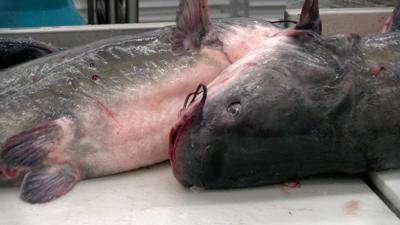

TILGHMAN ISLAND, MD - In the ongoing struggle to mitigate the impact of blue catfish on the Chesapeake Bay's ecosystem, Governor Wes Moore's proactive approach, from last year, faces a setback as the request for a fishery resource disaster declaration has been denied by the federal government.
This denial leaves Maryland without crucial financial aid to combat the invasive species, resulting in frustration among those grappling with the longstanding issue.
Blue catfish, a persistent problem in the Chesapeake Bay waterway for decades, pose a threat to the delicate balance of the ecosystem by preying on baby crabs, rockfish, and menhaden—integral components of the livelihood for commercial watermen. Maryland's fishery revenue has already experienced a significant decline of 24%, falling short of the federal government's required 35% decline to classify the invasive species as a disaster.
Lynn Fegley, the Director of Fishing and Boating Services at Maryland's Department of Natural Resources (DNR), warns of potential future impacts on commercial fisheries. Despite not meeting the 35% revenue decline threshold, Fegley emphasizes the need for urgent action, stating, "We have the potential to see some really big impact on our commercial fisheries if we don't get on top of this."
The denial of a fishery resource disaster declaration means that financial aid, which would have compensated commercial fisheries and implemented preventive programs, will not be entering Maryland's bank account. Disappointed watermen express their concerns over the decision, citing recent downturns in juvenile crab populations and the evident need for intervention.
Jeff Harrison, a commercial crabber and president of the Talbot Watermen Association, comments, "We've seen some downturns in the last two years in juvenile crabs, so I don't think it takes a rocket scientist to figure out we have a problem."
Waterman Nick Hargrove, and owner of Wittman Wharf Seafood, adds, "Now that they're not gonna help us, I think the ball is back into the state's hands, and we're gonna see exactly how much they're willing to put up or what their strategy is gonna be." Expressing concern about the future, Hargrove warns, "If we don't come up with strategic plans, 5-10 years from now, we're gonna be home of the blue catfish."
Despite the setback, Maryland's DNR remains committed to finding funding opportunities to address the blue catfish issue and encourages citizens to participate in fishing as a means to help alleviate the problem.
